
San Saba County Active Warrants Explained
Active and outstanding are status words. Only a current court or agency source can back them up. San Saba County posts no public active-warrant list, no Sheriff name-search form, and no update schedule. That describes the official pages, not every record a court or officer holds. For your own case, find the issuing court from a notice or citation. Then call that office. The County/District Clerk routes district and county questions. San Saba Justice Court and Municipal Court share (325) 372-5746. Richland Springs runs a separate municipal court. The Sheriff's page lists (325) 372-5551 for its general jail and non-emergency route. Keep the question narrow: does the court have an arrest warrant, summons, FTA, capias, or capias pro fine? Then ask what action applies.
No San Saba County Warrant List Online
The San Saba County Sheriff page offers contact details and a Public Information Act request route. There is no public warrant table, downloadable file, name field, or status filter. San Saba Police and Richland Springs Police publish no warrant portal either. The local online tools handle citations and payments. A blank search proves nothing either way. A missing online list can reflect a legal restriction or a reporting lag, not a closed record. Call the court that issued the process, or ask the Sheriff what service or custody information it can confirm. The official Sheriff page is the local source for that contact and request channel. It makes no claim to be a warrant search. To find which court holds a case, the Texas Judicial Branch directory lists courts across Texas. It does not show an individual warrant.
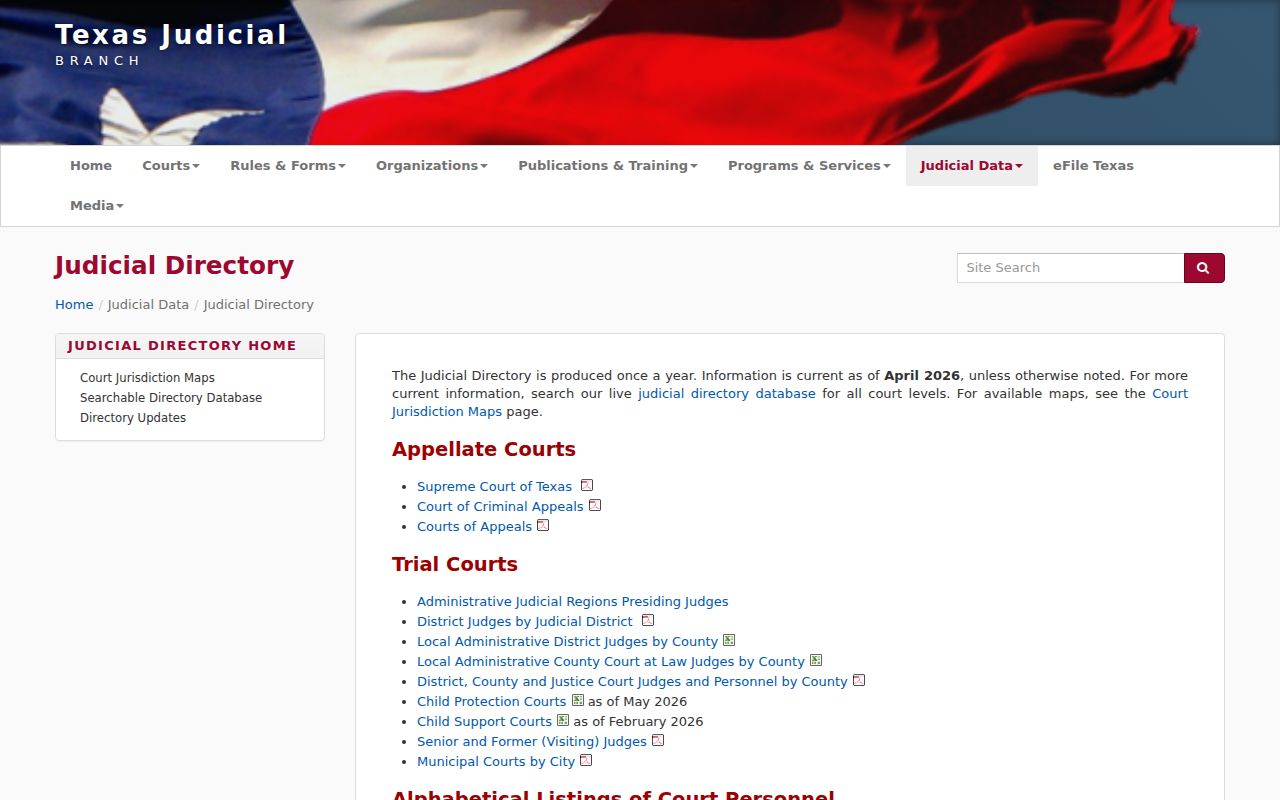
The Texas Judicial Branch directory helps locate the San Saba County court; it does not show any individual warrant.
How San Saba County Tracks Active Warrants
San Saba County offices publish no refresh cadence and no "last updated" field for warrants. Issuance by a court, service by an officer, a warrant return, and a later recall are separate events. A clerk's docket may update on a different day than a Sheriff's service record. Ask which event the office can confirm and on what date. OCA's municipal activity report names categories like arrest warrants and capiases pro fine. It is an administrative report schema, not a live list of local people. A category's presence proves no current count. Nor does it settle any person's status.
No resident count or court statistic can answer a San Saba County warrant question; only the issuing court's docket gives a case-level answer.
Inside an Active Warrant Record
San Saba County publishes no person-level warrant record and no status-code key. A court or agency may hold such fields in a specific file. A public copy can still be redacted or restricted. Ask for the document you need. A generic case result is not a complete warrant record.
| Issuing court | Identifies the court whose order controls the process. |
|---|---|
| Process type | Arrest warrant, summons, capias, capias pro fine, or another court entry. |
| Issue or return date | Separate dates can show issuance and later execution or service. |
| Status | Ask whether it remains active, was served, or was recalled; no local public code list was found. |
| Bond | No current county warrant schedule or amount was published. |
San Saba County Counts Are Not Warrant Counts
The 2020 Census counted 5,730 San Saba County residents, and the 2025 Census estimate is 5,787. OCA's municipal reporting materials include warrant categories. They offer no reliable outstanding-warrant total for San Saba. A small population does not turn an administrative figure into a live status record. City headcounts, court collections, and missing rows say nothing about open warrants. The OCA categories simply show how courts label activity. A specific case still needs the issuing court's docket or a direct status confirmation. For a copy, the Sheriff or court may ask for the cause number, a date range, and a description of the record. Keep that request separate from resolving the underlying matter.
Most-Wanted Lists and Warrant Roundups
A curated most-wanted program is not a full active-warrant list. San Saba County has no Sheriff most-wanted page, no local roundup, no amnesty docket, and no fee-waiver event. Texas DPS runs a statewide Texas 10 Most Wanted program. That is not a San Saba roster or a complete county index. Use an official program page only for its own tip or program details. Someone missing from a featured list may still have a warrant. A statewide fugitive page is not a local court record either. Confirm any roundup or payment offer through the court that issued the case. The statewide DPS program notice describes a state initiative, not a county roster.
Texas DPS Is Not a San Saba Warrant Search
Renewal trouble can start with a DPS failure-to-appear or failure-to-pay report. That system is a compliance channel, not a warrant lookup. No public arrest-warrant query lives there. DPS says a court update may take several business days to post, so a driver with a renewal hold should call each reporting court. OmniBase fields questions at (800) 686-0570. The Texas Court Reminder Program sends text and email reminders, but San Saba County posts no enrollment notice, so ask the county court or citation office what notices it sends. Texas runs no single public trial-court search portal. The Texas courts FAQ points you to whichever court or clerk keeps the case.
Active Warrants: What They Show
An active entry usually means a court order exists. Its meaning depends on the source and update date. A public case index, a service record, a warrant copy, and a current status answer are not the same thing, and treating them as one leads people astray. San Saba County publishes no glossary defining active, served, recalled, or satisfied. Under Chapter 15, an arrest warrant is a written magistrate order with set fields. A capias pro fine is different. That one enforces an unpaid fine. Ask the court which term it used. That way the next step matches the record. Do not read bond terms from the Sheriff's list of approved bond companies; the issuing court sets the bond process and confirms when the case is resolved.
San Saba County Courts Use Separate Records
San Saba County splits its court records by level. District felony files and county-court criminal cases sit under separate jurisdiction, though the local County/District Clerk routes both. Justice Court covers Class C and traffic cases countywide. The San Saba and Richland Springs municipal courts handle their own city cases. For district or county file routing, call Christi Whitley's office at (325) 372-3614. Justice and San Saba Municipal Court share a line: (325) 372-5746. For Richland Springs, check the current OCA directory before using older city portal contact details. A Sheriff's file may only cover service, custody, or a booking; Chapter 15 gives the state framework, and the local court answers the case question.
When Your Name Is on the Warrant List
A match is only a start. Whether it came from a notice, a court call, or a public result, confirm the issuing court and cause number before you act. Ask what the record actually shows. It could be an arrest warrant, a missed setting, a capias, a payment balance, or a DPS report. If the details are not yours, ask the court or record holder how to correct mistaken identity. Talk to a lawyer before any surrender or bond decision. San Saba County publishes no walk-in surrender schedule, warrant desk hours, or bond chart. Ask the court what action it will take. Get written proof of any payment, appearance, or order.
A result disappearing from a screen does not establish recall. Ask the issuing court what entry changed and keep the written order or receipt.
For the practical court-first route, see the San Saba County warrant lookup steps.