
San Saba County Arrest Warrants Explained
Under Texas Chapter 15, an arrest warrant is a written order from a magistrate telling a peace officer or named person to take an accused into custody. The court that issues it may not be the agency that serves it. A county address on a notice proves little about which office holds the warrant or its return. The San Saba County Sheriff publishes no public warrant roster or online lookup. For a district or county file, ask the combined County/District Clerk where the record sits. Justice and municipal cases stay with their own court. The Sheriff can explain its own service and records route. No local warrant unit or dedicated warrant line exists. Call before assuming who has the file.
San Saba County Warrant Issuance Starts With a Complaint
Chapter 15 grounds every San Saba County warrant in a sworn complaint and oath. The magistrate reviews it. If the legal standard is met, the magistrate issues a written order. Statute requires the person's name or description, the charged offense, and the magistrate's signature and title. San Saba County courts publish no single countywide issuance workflow. District, county, Justice, or municipal court may each be involved. A peace officer may serve the process. A separate return or service record can follow. The official Texas Code of Criminal Procedure, Chapter 15 sets out the statewide complaint-and-warrant framework, and the full current code adds the municipal and capias provisions local courts use. Read both before guessing at local process.
The statute supplies the form and process context, not a local person-level record.
Inside a San Saba County Arrest Warrant
San Saba County publishes no local warrant number format, status code, or downloadable sample. The statutory fields are name or description, the charged offense, and the magistrate's signature and title. Ask which paper you need. A warrant, complaint, affidavit, return, docket entry, or service record may each sit in a different office.
| Name or description | Chapter 15 identifies the accused person without a public sample here. |
|---|---|
| Offense | The written order names the offense charged. |
| Magistrate | Signature and title are part of the statutory requisites. |
| Complaint or affidavit | Sworn support may be linked to the order and can face access limits. |
| Execution and return | Service details may be held by the Sheriff or another officer. |
| Cause and status | Ask the court for the local case identifier and current status entry. |
San Saba County Arrest Records Have Access Limits
Chapter 15 §15.26 opens an executed arrest warrant and its supporting affidavit to public inspection during normal business hours. Release is not guaranteed. Active-investigation exceptions, sealing, redactions, and juvenile confidentiality can change what a San Saba County requester receives. §58.010, effective December 4, 2025, goes further. Texas Family Code §58.010 makes a child's arrest warrant, complaint, or affidavit confidential except for listed authorized access. That is not routine public-search material. Ask the court or counsel about lawful access.
Public access is record-specific. Ask for releasable portions and the legal basis if material is withheld.
The Texas Family Code sets the child-record rule. The official Chapter 15 text governs public access to executed arrest-warrant material, subject to its stated exceptions.
Statutory text explains access boundaries; it does not reveal a local warrant entry.
Serving Arrest Warrants in San Saba County
Any authorized peace officer can serve a warrant in San Saba County. The Sheriff is the county's verified law-enforcement contact. San Saba Police lists a daytime office number. No public serving-agency matrix, warrant division, or dedicated service line exists, and Richland Springs has no police portal here. Don't assume a named officer handled service. For a Sheriff-held record, call (325) 372-5551 or use the San Saba County request route. San Saba Police lists (325) 372-6292 during the day and (325) 372-5551 after hours. The issuing court alone can say whether its order was recalled or changed. Skip 911 for status questions. Emergency dispatch is for emergencies.
Arrest Warrants, Summonses, and Bench Warrants
These labels mark different court steps. A summons directs a person to appear, not into custody. A bench warrant usually follows missed court dates or noncompliance in San Saba County. A capias pro fine enforces a fine after judgment. Ask the issuing court for its exact term.
| Record | Usual question | First route |
|---|---|---|
| Arrest warrant | Was a magistrate’s order issued or executed? | Issuing court, then service agency |
| Summons | What appearance date is set? | Court named on notice |
| Bench warrant or FTA | Did a missed setting lead to process? | Court that set the date |
| Capias pro fine | What court action follows compliance? | Municipal or Justice Court |
Payment, appearance, service, and recall are separate events.
San Saba County Warrant Copies and Records Requests
The combined County/District Clerk sits at 500 E Wallace, Suite 202, and answers (325) 372-3614. That office holds the records assigned to it, but district court administration is regional, so confirm who holds the specific warrant before you pay anything. E-filing is not a public warrant search. The San Saba County Sheriff's records form asks for the record type, incident date or range, known Sheriff case number, involved person, and description. Email it to SSSOrecords@sansabacounty.gov. Or submit it at the courthouse. Expect a fee estimate over $40, plus a deposit or bond for some requests over $100. No fixed warrant-copy fee is published. Check the County/District Clerk page or the Sheriff request instructions to confirm the current route.
San Saba County Arrest Warrant Versus License Hold
A DPS failure-to-appear or failure-to-pay report works differently from an arrest warrant. Under Transportation Code Chapter 706, a report can block renewal of a Texas driver license. That is a compliance hold, not a warrant. The court reports the qualifying matter. DPS then points you to each reporting court plus OmniBase, and reported updates take several business days to show. Federal process is a separate track. San Saba County sits in the Western District of Texas, Austin Division, and its county offices cannot resolve federal warrants. The PACER fee and access FAQ sets out the public docket limits, including costs, while sealed filings stay closed to that system.
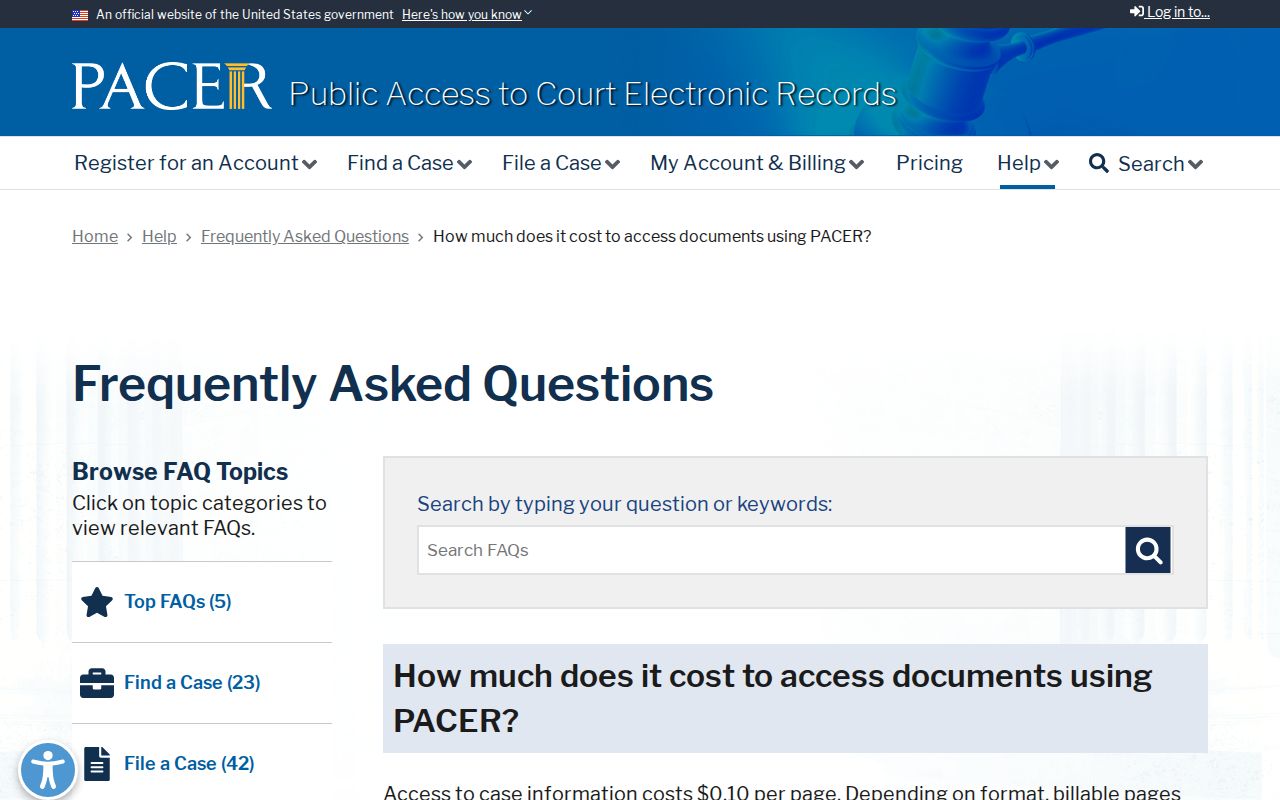
The PACER fee and access FAQ covers docket access costs, not San Saba County warrant records.
What to Do If There Is a San Saba County Warrant
Call the court or a lawyer before you appear anywhere. Ask which process exists, whether bond has been set, and whether a motion or counsel is needed. Find out whether the Sheriff plays a separate booking or service role. No San Saba public page posts surrender hours, bond-window times, current bond amounts, or walk-in procedure, so get those details by phone.
Do not treat a records request as a resolution step. Get legal advice about an arrest warrant and confirm the court’s instructions before making a surrender decision.
Keep written proof of every appearance, payment, order, or recall. For court-first steps in San Saba County, start with the San Saba County warrant records overview.
San Saba County Warrant Status Must Be Confirmed
A public warrant search can miss things. Unexecuted, sealed, juvenile, and newly entered records may not appear at all. A result can also lag behind a court order. Chapter 15, the Texas Public Information Act, and local court rules each govern a different slice of access. The clerk can explain which public file it holds; the issuing court can confirm the current process. If a body withholds records, ask whether nonexempt portions can be released and whether it will seek an Attorney General ruling. The Texas Attorney General overview describes that state request framework.